References to Consult Concerning Radioactive
Tubes
The following is a basic list of publications
conerning the handling and use of radioactive tubes.
–
Department of Defense Hazardous Materials
Information System (HMIS), DOD 6050.1-L
–
R a d i a t i o n H e a l t h P ro t e c t i o n M a n u a l ,
NAVMED P-5055
–
Afloat Supply Procedures, NAVSUP P-485
–
EIMB, General
–
EIMB, Radiac
–
Safety Precautions for Forces Afloat
–
Naval Ships’ Technical Manual, Chapter 400
Technical Assistance
For technical assistance and advice regarding
identification, stowage, or disposal of radioactive
tubes, contact:
Officer In Charge
Naval Sea Systems Command Detachment
Radiological Affairs Support Officer
(NAVSEADET, RASO)
Naval Weapons Station
Yorktown, VA 23691-5098
X-RAY EMISSIONS
X-rays may be produced by high-voltage
electronic equipment. X-rays can penetrate human
tissue and cause both temporary and permanent
damage. Unless the dosage is extremely high, there
will be no noticeable effects for days, weeks, or even
years after the exposure.
The sources of these x-rays are usually confined to
magnetrons, klystrons, and CRTs. Where these types
of components are used, you should not linger near any
equipment on which the equipment covers have been
removed. Klystrons, magnetrons, rectifiers, or other
tubes that use an excitation of 15,000 volts or more
may emit x-rays out to a few feet, thus endangering you
or other unshielded personnel standing or working
close to the tubes.
If you must perform maintenance on x-ray
emitting devices, take the following precautions:
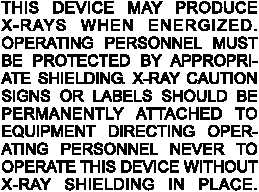
Observe all warning signs (fig. 3-9) on the
equipment and all written precautions in the
equipment technical manual.
Do NOT bypass interlocks that prevent the
servicing of operating equipment with the x-ray
shield removed, unless the technical manual
requires you to do so.
Be sure to replace all protective x-ray shielding
when you finish the servicing.
Q10. W h a t p u b l i c a t i o n g i v e s b a s i c c l e a n u p
procedures for a broken, radioactive tube?
SUMMARY
This chapter has presented radar safety measures
you are expected to practice in your daily work. As
with electrical and electronic safety, the greatest
danger you will face as a Fire Controlman is becoming
too familiar with the safety hazards you will face.
COMPLACENCY KILLS! Radio frequency energy is
not the only hazard associated with working around
radar. Working aloft has its own set of hazards. Be
3-17
CAUTION
X-RAY
Figure 3-9.—X-ray caution label.